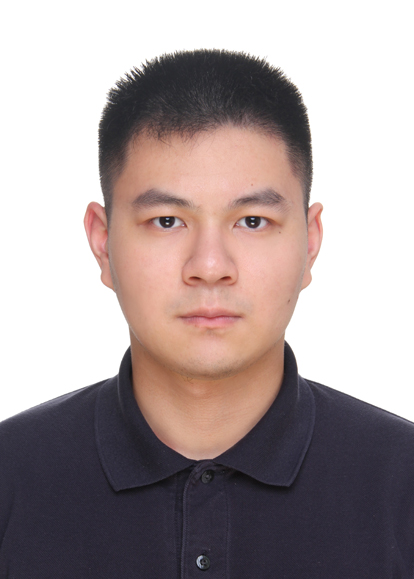
About me
I am a researcher and engineer driven by a simple conviction: to seek truth and build solutions that are meaningful in the real world. My interests lie at the intersection of robot learning, optimization, and control, where mathematical rigor must ultimately meet the demands of real hardware, real-time computation, and safety-critical deployment. I am especially drawn to problems that bridge classical model-based methods and modern learning approaches, not as an academic exercise, but as a path toward autonomous systems that are genuinely reliable and deployable.
My path into this space was shaped by a dual-degree in Electrical Engineering between Zhejiang University and the University of Illinois at Urbana–Champaign, where I developed a foundation in system dynamics, feedback control, and embedded systems, grounded by hands-on work with sensors, embedded platforms, and robotic prototypes. That early experience of bridging theory and physical hardware convinced me that the most important and honest problems live precisely in that gap.
At Penn, I worked across a range of approaches, including probabilistic dynamics modeling, sampling-based control, full-stack autonomous systems, and learning-to-optimize frameworks, before converging on what I see as the most compelling frontier: the boundary between model-based optimization and data-driven learning. Through that exploration, I came to see these not as competing paradigms but as complementary tools. Probabilistic and learning-based methods capture what models cannot fully express, while structured optimization provides the guarantees and interpretability that real deployment demands. The research I want to pursue lives at this intersection, principled enough to reason about safety and uncertainty yet adaptive enough to handle real-world complexity. I am actively looking for PhD and RA opportunities where I can pursue these questions, so please feel free to get in touch.
Outside of research, I am drawn to EDM — a genre where classical music theory meets the synthesizer, and where structure and energy reinforce rather than oppose each other. I find it shares more with robot learning than it might seem.